
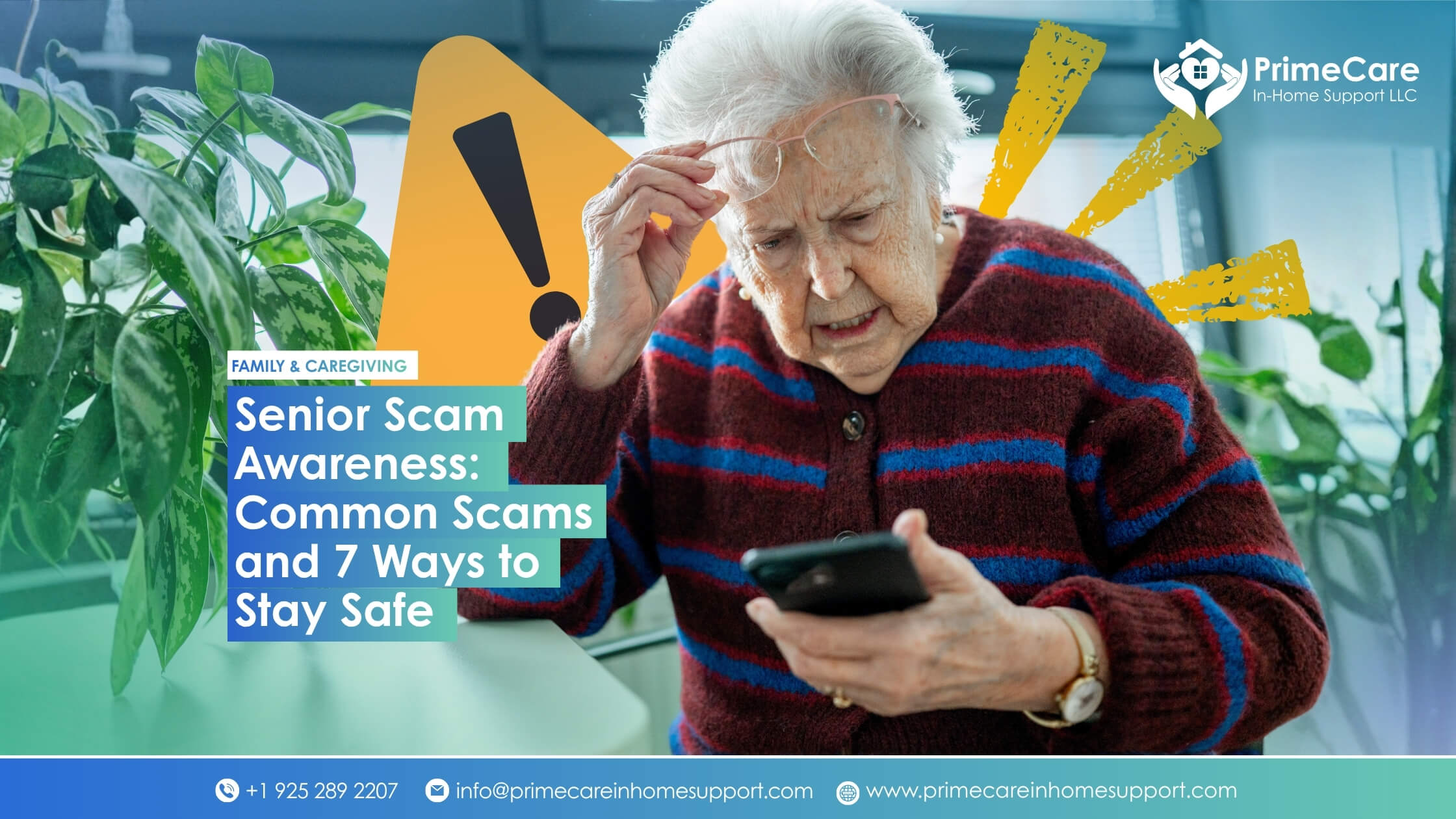
Scam Awareness
Senior Scam Awareness: Before Grandma Sends the Money, Let’s Talk About This
Senior scam awareness starts with a calm conversation before a scammer calls, because scams aimed at older adults keep growing. This guide explains the five scams to know, the grandparent scam in detail, seven ways to protect your parent, and what to do if money has already been sent.
The short version
- Adults 60 and older filed 201,266 complaints with the FBI in 2025 and reported about $7.7 billion in losses, an average of $38,500 each.
- The grandparent scam works by creating panic and secrecy. The fix is simple: hang up and call the relative back on a number you already know.
- Agree on a family code word, never pay with gift cards, wire transfers, crypto, or cash couriers, and tell someone before sending money.
- If money was sent, act fast: call the bank, then report it to the FTC, the FBI, and the National Elder Fraud Hotline.
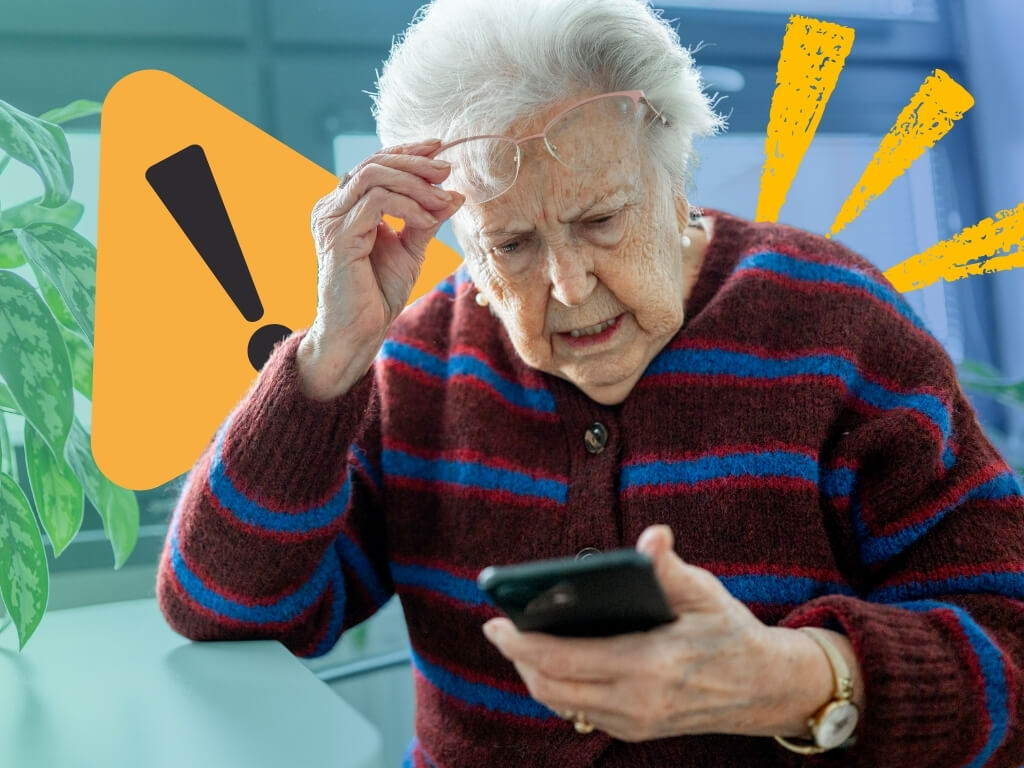
The phone rings in the middle of the afternoon. A shaky voice says, “Grandma, it’s me. I’m in trouble. Please don’t tell Mom and Dad.” Her heart jumps. She wants to help, and she wants to help right now. That reaction is exactly what the scammer is counting on.
These schemes succeed because of love, not foolishness. They are built to create fear and urgency so that a smart, caring person acts before thinking. Anyone can be fooled in the wrong moment, which is why the best protection is a plan your family makes together, calmly, ahead of time.
PrimeCare In-Home Support is a licensed, non-medical home care agency based in San Leandro, serving families across the Bay Area. We see how isolation and pressure can leave older adults exposed, and we want families to have the words to start this conversation. This article is general information, not legal or financial advice.
In this guide
The numbers · Why it matters
Why scammers target older adults, and what the numbers show
Short answer: scammers go where the money, trust, and politeness are, and older adults often have all three. Senior scam awareness means knowing the common schemes and agreeing on a response before one arrives.
Scammers often favor older adults because they may have savings or a home, may answer calls from unknown numbers, and were often raised to be courteous on the phone. Loneliness can also make it harder to get a second opinion in the moment. None of this is a flaw in your parent. It is a reason to build a safety net.
The FBI’s 2025 Internet Crime Report shows how large the problem has become for people age 60 and older:
- 201,266 complaints, up 37% from 2024
- About $7.7 billion in reported losses, up 59% from 2024
- An average loss of $38,500 per complaint
- 12,444 people lost more than $100,000
These numbers only count crimes that were reported. AARP’s summary of the FBI and FTC data adds that people 50 and older reported $4.3 billion in fraud losses to the FTC in 2025.
Know the scams · Quick guide
5 common scams targeting seniors
Short answer: the most common scams against older adults are family emergency (grandparent) scams, government impersonation, tech support and refund scams, romance scams, and investment or cryptocurrency scams. This table shows what each one sounds like and the red flag to listen for.
| Scam | What it sounds like | The red flag | FBI-reported losses, adults 60+, 2025 |
|---|---|---|---|
| Grandparent or family emergency | “Grandma, it’s me. I’m in trouble and need money right now. Please don’t tell Mom.” | Urgency, secrecy, and a request to send money fast. | Not tracked as a separate category. |
| Government impersonation | “This is a federal agency. There is a problem with your benefits or taxes, and you must pay today.” | Real agencies do not demand payment by gift card, wire transfer, or cryptocurrency. | About $413 million |
| Tech support and refund | A pop-up says “your computer has a virus,” or a caller says “we owe you a refund.” | An unexpected request to log in to your computer or bank account. | About $1.04 billion |
| Romance (confidence) | Someone you met online says they love you but can never meet, then needs money. | They never meet in person, and the money requests grow. | About $584 million |
| Investment and crypto | “A guaranteed return, but you have to act today,” often with a coach who walks you through a crypto platform. | Guaranteed returns, pressure to hurry, and instructions to move money into crypto. | About $3.5 billion |
Different scripts, same pattern: a stranger creates urgency, asks for secrecy, and wants payment in a way that is hard to trace or reverse. Be extremely suspicious of anyone who asks your parent to pay with:
- Gift cards, or the numbers on the back of them
- A wire transfer or payment app sent to someone they do not know
- Cryptocurrency, including a crypto ATM
- Cash mailed in a package or handed to a courier
- Account passwords or one-time verification codes
The classic · Family emergency
The grandparent scam, and what to say instead
Short answer: the grandparent scam, also called a family emergency scam, is when a caller pretends to be a grandchild or other relative in trouble and urgently asks for money. The safest response is to hang up and call that relative directly on a number you already know.
The caller may claim to be in jail, in a car accident, or stranded abroad. Someone else may then take over the call, posing as a lawyer, a police officer, or a bail bondsman. The story changes, but the ask does not: send money now, tell no one, and pay in a way that cannot be undone.
What the scammer says
“Grandma, it’s me. Please don’t tell Mom and Dad. I need money today.”
What to say instead
“I’m going to hang up and call you right back on your real number.”
Make that sentence easy to say. Practice it with your parent the way you would practice a fire drill. A real grandchild in real trouble will understand the call-back. A scammer will push, plead, or hang up.
New twists · AI
AI voice cloning and other new twists
Short answer: a voice on the phone is no longer proof of who is calling. Consumer protection agencies, including the FTC, have warned that scammers can use AI to imitate a relative’s voice, so the call-back rule and a family code word matter more than ever.
A few seconds of audio from a public video can be enough to make a convincing copy of a voice. Scammers can also fake caller ID so a call appears to come from a bank, a government office, or even a family member’s number. That is why the advice is to verify through a second channel instead of trusting how a call sounds or looks.
Prevention · 7 habits
7 ways to protect your parent from scams
Short answer: agree on a family code word, hang up and call back, never pay with gift cards or crypto, tell someone before sending money, and keep the conversation shame-free. These seven habits work for most families.
- Pick a family code word. Choose something that cannot be guessed from social media, such as not a pet’s name or a street. Anyone asking for emergency money has to say it.
- Hang up and call back. End the call, then phone the person or organization using a number you already know, not one the caller gave you.
- Slow everything down. A demand to act today is a reason to wait. Take at least a day, and talk to someone you trust, before any money moves.
- Refuse unusual payment methods. Gift cards, wire transfers to strangers, cryptocurrency, and cash couriers are the scammer’s favorites for a reason.
- Screen the calls. Let unknown numbers go to voicemail, and ask the phone carrier about call-blocking tools. Real callers leave messages.
- Add a second set of eyes. Ask the bank about transaction alerts and whether a trusted contact can be named on the account, and keep a short list of key phone numbers by the phone.
- Keep the conversation open and free of blame. Share a story about a scam that nearly fooled you, ask what your parent would do, and make it clear that telling you is always the right move. Our guide to how to talk to your parents about home care has wording that works for sensitive topics like this one.
Act fast · If it happened
What to do if money was already sent
Short answer: stop all contact, call the bank or payment company right away, and report the scam to the FTC, the FBI, and the National Elder Fraud Hotline. Speed matters, and there is no shame in it.
- Stop talking to the scammer. Do not send more money, even if they threaten, plead, or promise a refund.
- Call the bank, card issuer, or payment service immediately. Ask whether the transfer can be stopped or reversed, and ask about securing the account. For gift cards, contact the card company.
- Report it. File with the FTC at ReportFraud.ftc.gov and with the FBI’s Internet Crime Complaint Center at ic3.gov. The National Elder Fraud Hotline at 1-833-FRAUD-11 (1-833-372-8311) can help people 60 and older with next steps. Also consider a report to local police.
- Secure the rest. Change passwords, watch accounts closely, and be alert for follow-up calls, since victims are sometimes targeted again.
- Tell the family and be kind. Shame keeps scams hidden. Support, not blame, helps a parent recover and report the next one sooner.
If you believe a parent is in immediate danger, call 911. Money lost to scams is sometimes recovered and sometimes not, so we cannot promise an outcome, but fast action gives the best chance.
Support · At home
How in-home support can help
Senior scam awareness is easier when someone trusted is nearby. Scams thrive on pressure and silence, and a regular, trusted presence in the home can interrupt both. A caregiver who visits on a steady schedule may notice a stack of gift cards, an unfamiliar package, a distressing phone call, or a parent who seems suddenly anxious, and can pass that along to the family. That is the same kind of everyday attention described in our list of signs your aging parent may need in-home care.
Company itself helps, too. Companion care brings conversation and a familiar face, and many scams reach people who spend long days alone. PrimeCare caregivers provide non-medical support, not legal or financial advice, and a caregiver is never a replacement for financial oversight by the family.
PrimeCare offers flexible scheduling with a 4-hour minimum shift, and plans adjust as needs change. To explore options, see our home care services or the areas we serve.
Frequently asked questions
What is the grandparent scam?
The grandparent scam, also called a family emergency scam, is a fraud in which a caller pretends to be a grandchild or other relative in trouble and urgently asks for money. Scammers rely on panic and secrecy and often ask for payment by gift card, wire transfer, cryptocurrency, or cash. The safest response is to hang up and call the relative directly on a number you already know.
Why do scammers target older adults?
Scammers often target older adults because they may have savings or a home, may answer calls from unknown numbers, and were often raised to be polite and trusting. Isolation can also make it harder to get a second opinion in the moment. Being targeted is not a sign of foolishness, because these schemes are designed to fool anyone.
How much do older adults lose to scams?
According to the FBI’s Internet Crime Complaint Center, adults 60 and older filed 201,266 complaints in 2025 and reported about $7.7 billion in losses, an average loss of $38,500 per complaint. More than 12,000 of those complainants lost over $100,000. These figures include only reported cases.
What are the most common scams targeting seniors?
The FBI’s 2025 data for adults 60 and older ranked investment scams, tech and customer support scams, confidence and romance scams, business email compromise, and government impersonation highest by reported losses. Family emergency, or grandparent, scams are also widely reported.
What should my parent do if they get a suspicious call?
Hang up without pressing any buttons, then call the person or organization using a number they already know. Never pay or share codes or passwords with a caller, take time before sending any money, and tell a family member or trusted friend about the call.
How do I talk to my parent about scams without making them feel foolish?
Share a story about a scam that nearly fooled you or someone you know, ask what your parent would do, and agree together on a family code word and a call-back rule. Emphasize that anyone can be fooled and that telling you is always the right move.
Where do I report a scam against an older adult?
Report it to the FTC at ReportFraud.ftc.gov and to the FBI’s Internet Crime Complaint Center at ic3.gov. The National Elder Fraud Hotline at 1-833-FRAUD-11 (1-833-372-8311) can help people 60 and older with reporting and resources. Also contact the bank or payment company right away and consider a report to local police.
Can money lost to a scam be recovered?
Sometimes, but not always. Contacting the bank, card issuer, or payment service immediately gives the best chance of stopping or reversing a transfer, while payments made by gift card, cash, or cryptocurrency are much harder to recover. Reporting quickly also helps investigators.
Can in-home care help protect a senior from scams?
A caregiver can be a trusted, regular presence who notices unusual calls, mail, or gift card purchases and tells the family. In-home care is not a substitute for financial oversight, and PrimeCare caregivers provide non-medical support, not legal or financial advice.
Worried about a parent living alone? Let’s talk.
Free, no-obligation consultation, personalized to your family’s needs. Serving Alameda, Contra Costa, San Mateo, San Francisco, and Santa Clara counties.
This article is for general information and is not legal, financial, or medical advice. Statistics come from the FBI Internet Crime Complaint Center’s 2025 Internet Crime Report and reflect reported complaints only. PrimeCare In-Home Support LLC is a licensed home care organization (HCO #014700283) providing non-medical care, located at 433 Callan Ave STE 203, San Leandro, CA. Reporting resources and phone numbers can change, so confirm details with each organization.