
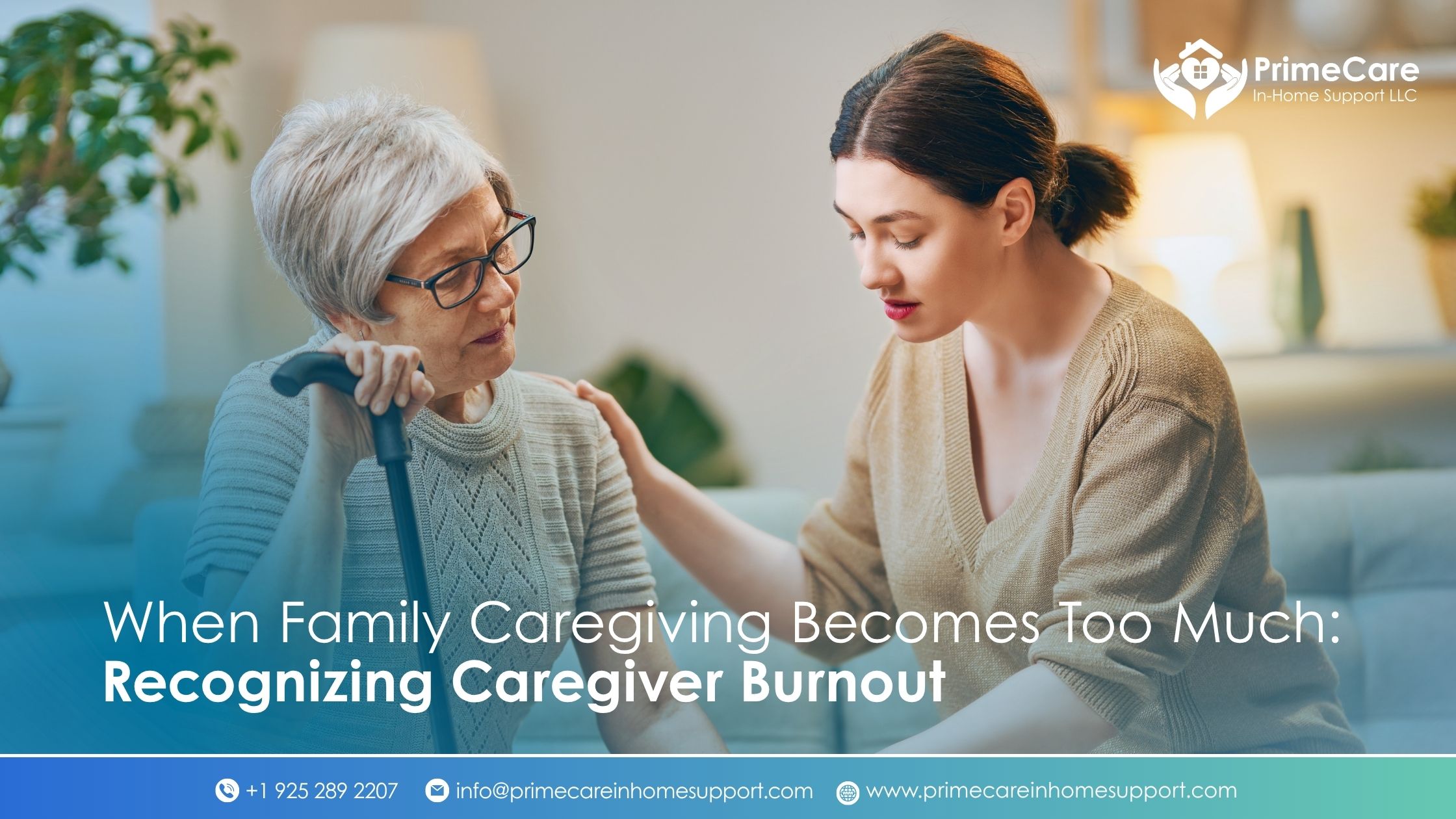
Caring for an aging parent or loved one often starts small: a few extra errands, help with meals, a little more checking in. But over time, those responsibilities can grow into a full-time, unpaid job that leaves little room for anything else. If you’re a family caregiver feeling stretched thin, you’re not alone, and what you’re experiencing has a name: caregiver burnout.
What Caregiver Burnout Looks Like
Burnout doesn’t usually happen overnight. It builds gradually, often disguised as “just being tired” or “a rough week.” Common signs include:
- Constant fatigue, even after rest
- Feeling irritable, resentful, or emotionally numb
- Withdrawing from friends, hobbies, or activities you used to enjoy
- Trouble sleeping or changes in appetite
- Getting sick more often than usual
- Feeling like nothing you do is ever enough
If several of these sound familiar, it doesn’t mean you’re failing as a caregiver. It means the demands you’re carrying have outpaced what one person can sustainably manage alone.
The Emotional and Physical Toll
Family caregiving is physically demanding, but the emotional weight is often just as heavy. Many caregivers experience guilt for feeling tired or frustrated, especially when caring for someone they love deeply. That guilt can make it harder to admit when things feel unmanageable, which only adds to the exhaustion.
Physically, chronic stress takes a real toll too, on sleep, immune function, and overall health. Caregivers who don’t get adequate support are at higher risk for their own health problems down the line, which can ultimately affect the person they’re caring for as well.
Why Asking for Help Isn’t a Failure
One of the hardest parts of caregiver burnout is believing that asking for help means you’ve somehow fallen short. In reality, sustainable caregiving requires support. No one is meant to carry this responsibility entirely alone, and bringing in help often means better care for your loved one, not less devoted care.
Reaching out for support is a sign of good judgment, not weakness. It allows you to keep showing up for your loved one without sacrificing your own wellbeing in the process.
How Respite Care Can Help
Respite care gives family caregivers a break, whether that’s a few hours a week or more regular ongoing support. It allows you to rest, attend to your own responsibilities, or simply recharge, while knowing your loved one is safe and cared for.
Even a small amount of consistent relief can make a significant difference in preventing burnout from reaching a breaking point. It’s not about stepping away from caregiving, it’s about making it sustainable for the long run.
PrimeCare In-Home Support Is Here to Help
If you’re a family caregiver feeling overwhelmed, PrimeCare In-Home Support LLC can help lighten the load. As a non-medical home care provider based in San Leandro, CA, serving families across the Bay Area and East Bay, we offer respite care and ongoing in-home support, including personal care, companionship, meal preparation, light housekeeping, and errands, so you can take the time you need without worrying about your loved one’s care.
You don’t have to do this alone.
📞 +1 925 289 2207 📧 info@primecareinhomesupport.com 🌐 www.primecareinhomesupport.com
This article is for general informational purposes and isn’t a substitute for professional medical or mental health advice. If you’re experiencing significant emotional distress, please consider reaching out to a healthcare provider or counselor for support.
Contact Us
Contact PrimeCare In-Home Support to learn more about our personalized non-medical in-home care services.