
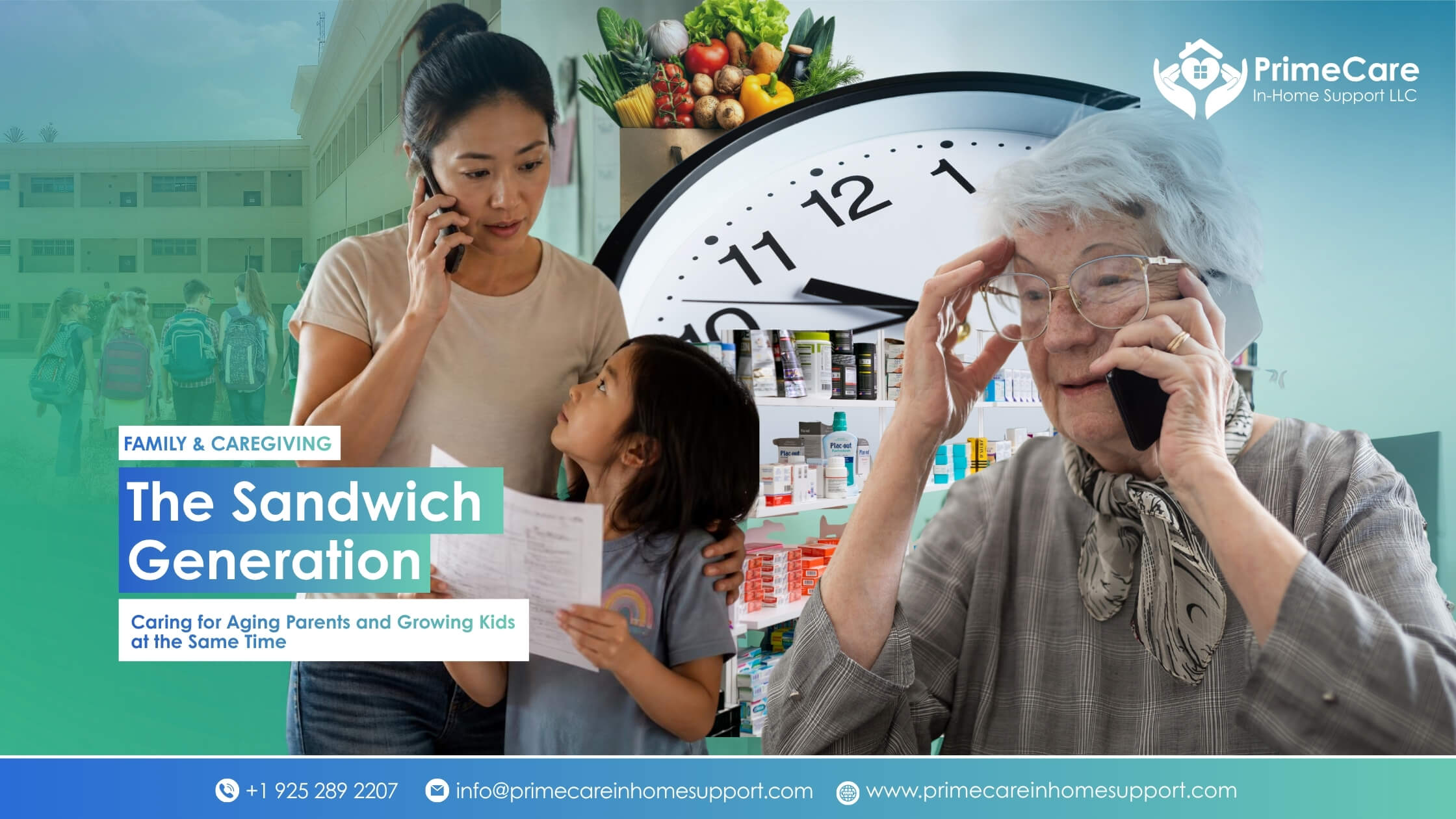
Family & Caregiving
The Sandwich Generation: Caring for Aging Parents and Growing Kids at the Same Time
One phone call is about a school project. The next is about a doctor’s appointment for your mother. If your days feel like they’re split between raising kids and caring for aging parents, there’s a name for it — and you’re far from the only one living it.
Quick Takeaways
- The “sandwich generation” refers to adults simultaneously raising children and caring for aging parents
- It’s increasingly common as people have kids later and parents live longer
- Burnout in this group often comes from divided attention, not just the amount of work
- Outside support for one side of the equation can ease pressure on both
There’s a particular kind of exhaustion that comes from being needed in two directions at once. Your kids need help with homework, rides, and everyday life. Your parents need help with appointments, medications, and increasingly, just getting through the day. You’re not choosing one over the other — you’re trying to hold both, usually while also working a full-time job.
This is the reality for millions of adults, commonly referred to as the “sandwich generation.” If it feels like there aren’t enough hours in the day, that’s not a personal failing — it’s math.
Why This Is More Common Than Ever
A few shifts have made the sandwich generation larger and more strained than it used to be. People are having children later in life, which means school-aged kids often overlap with parents who are entering their 70s and 80s. At the same time, people are living longer, often with chronic conditions that require ongoing support rather than a short recovery. And more families are geographically spread out, meaning the “village” that used to help share the load simply isn’t as close by anymore.
It’s not that you’re doing too little. It’s that you’re being asked to be in two places, emotionally and physically, at once.
What This Actually Feels Like Day to Day
Sandwich generation stress doesn’t usually look like one dramatic crisis. It looks like:
- Rearranging your work schedule around a parent’s doctor appointment and a kid’s school pickup on the same day
- Feeling guilty no matter which direction you give your attention
- Losing track of your own needs — appointments, hobbies, rest — because there’s always someone else’s need in front of it
- Financial strain from supporting two generations at once
- Feeling like you can never fully be present in either role, because part of your mind is always on the other
Where to Find Room to Breathe
You can’t add hours to the day, but you can change what fills them. A few things that genuinely help:
- Get specific about what’s actually urgent versus what you’ve assumed is urgent. Not every task needs to happen today, even if it feels that way in the moment.
- Loop in siblings or other family members with specifics, not vague asks. “Can you take Mom to her appointment Thursday at 2pm” gets a different response than “I could really use some help.”
- Separate the two roles where you can, instead of blending them constantly. Trying to parent and caregive in the same moment often does neither well.
- Bring in outside support for one side of the equation. You may not be able to outsource parenting, but a few hours a week of in-home care for a parent can free up meaningful time and mental space.
That last point is often the one families resist longest, usually out of guilt — as if bringing in help means admitting you couldn’t handle it yourself. In practice, it’s closer to the opposite: recognizing you’re stretched across two generations and choosing to protect your capacity for both, rather than quietly running both into the ground.
PrimeCare In-Home Support works with a lot of families in exactly this position — not because a parent needs full-time care, but because a few hours a week of companionship, help with errands, or medication reminders gives an adult child enough room to actually be present for their own kids too.
Stretched between two generations?
A free in-home assessment can help you figure out what kind of support would actually give you room to breathe.
Frequently Asked Questions
What is the “sandwich generation”?
It refers to adults who are simultaneously raising children and caring for aging parents, often while also working full-time. It’s an increasingly common position due to later parenthood and longer life expectancy.
Why does sandwich generation caregiving feel so exhausting?
It’s often less about the total workload and more about constantly divided attention — feeling pulled in two directions and never fully present in either role.
Does bringing in outside help mean I’m not doing enough for my parent?
No. Bringing in support for even a few hours a week is what allows many sandwich generation caregivers to stay present for both their parents and their own kids, rather than running both responsibilities into the ground.
Does PrimeCare offer flexible, part-time support for aging parents?
Yes. PrimeCare In-Home Support offers flexible scheduling starting at a 4-hour minimum, so families can bring in exactly the amount of support that fits their situation.