
Family & Caregiving
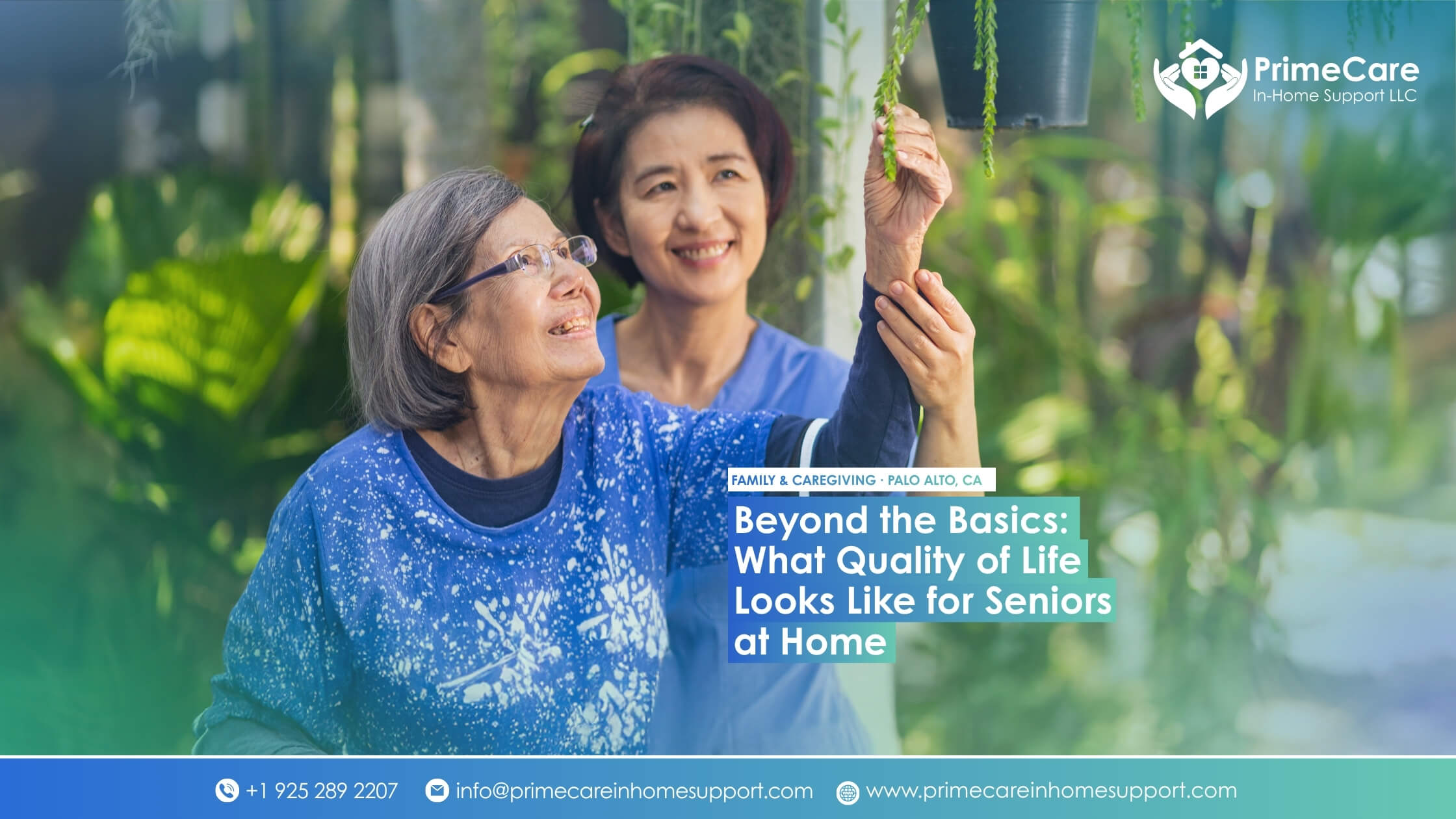
Beyond the Basics: What Quality of Life Looks Like for Seniors at Home
A senior can be bathed, fed, and medically safe, and still not be living well. True quality of life asks a different question: does this day feel like theirs?
Quick Takeaways
- Safety and hygiene are the floor, not the goal, of good senior care
- Routine, choice, and familiar surroundings matter as much as physical needs
- Hobbies and purpose don’t have to stop because daily life gets harder
- Good in-home care protects a senior’s identity, not just their schedule
It’s easy to measure care by a checklist. Did they eat? Did they bathe? Is the house clean? Did they take their medication? These are the things families ask about first, and they matter. But a senior can have every box checked and still be living a smaller, flatter version of their life than the one they actually want.
Quality of life lives in the spaces between the basics: in whether someone still gets to choose what their day looks like, whether they’re still doing things that feel like them, and whether they still feel like a person with a say, not just a patient being managed.
Routine: The Quiet Backbone of Wellbeing
A predictable rhythm to the day does more for a senior’s sense of stability than most people realize. Knowing what comes next, morning coffee at the same time, a walk after lunch, a favorite show in the evening, creates a sense of control that illness or aging can otherwise chip away at. Good care doesn’t impose a new routine. It learns and protects the one that already exists.
A life well cared for still has to feel like a life, not a schedule someone else is running.
Hobbies and Purpose Don’t Have an Age Limit
Interests don’t disappear just because daily life gets harder to manage. A senior who loved gardening, painting, cards, or reading often still wants that part of their life, even if they need help setting it up or can’t do it exactly the way they used to. Quality care looks for ways to keep these things alive rather than quietly letting them fade because they’re inconvenient to accommodate.
- Adapting a hobby instead of abandoning it, like large-print books or easier-grip gardening tools
- Making time for it regularly, not just when there’s nothing else to do
- Asking what they used to enjoy, not assuming it no longer matters to them
Social Connection Isn’t Optional
Isolation is one of the most underestimated risks for aging adults, and it rarely looks dramatic from the outside. It looks like fewer visitors, fewer phone calls, more hours spent alone in a quiet house. Real conversation, not just supervision, is part of genuine quality of life. A caregiver who talks with someone, not just at them, who remembers their stories and asks about their day, provides something a checklist can’t capture but a person feels immediately.
Choice, Even in Small Things
As people need more help, it’s easy for decisions to quietly shift away from them, what to eat, what to wear, when to nap, what to watch. Preserving quality of life means protecting choice wherever possible, even in small, seemingly minor decisions. Being asked “what would you like today” instead of being told what’s happening today makes a meaningful difference in how someone experiences their own life.
Familiar Surroundings Carry More Weight Than They Seem To
There’s a reason aging in place matters so much to so many seniors. A familiar home holds decades of memory, routine, and identity in ways that are hard to replicate anywhere else. The specific chair, the view from a particular window, the sound of a street they’ve lived on for years, these aren’t small comforts. They’re part of what makes a life feel like their own, which is exactly why in-home care, done well, protects something that a change of setting often can’t.
What This Looks Like With the Right Caregiver
This is the part of care that’s hardest to standardize and easiest to overlook, and it’s exactly where PrimeCare In-Home Support focuses as much attention as the practical tasks. Our caregivers are matched not just for availability, but for genuine compatibility, someone who will actually sit and play cards, ask about the garden, or remember how your father likes his coffee. Quality of life isn’t an add-on to care. It’s the point of it.
Want care that protects more than just the basics?
A free in-home assessment can help build a care plan around who your loved one actually is.
Frequently Asked Questions
What does “quality of life” mean for seniors beyond basic care?
It includes routine, social connection, hobbies, the ability to make choices, and staying in familiar surroundings, alongside physical needs like meals, hygiene, and safety.
Why does routine matter so much for aging adults?
A predictable daily rhythm provides a sense of stability and control that can otherwise be eroded by illness or aging. Good care protects an existing routine rather than replacing it.
Can hobbies still be part of a senior’s life with in-home care?
Yes. Many hobbies can be adapted rather than abandoned, and good caregivers make space for the things a senior genuinely enjoys, not just medically necessary tasks.
How does PrimeCare support quality of life, not just physical care?
Caregivers are matched for genuine compatibility, not just availability, with attention to routine, conversation, choice, and a senior’s individual interests and preferences.