
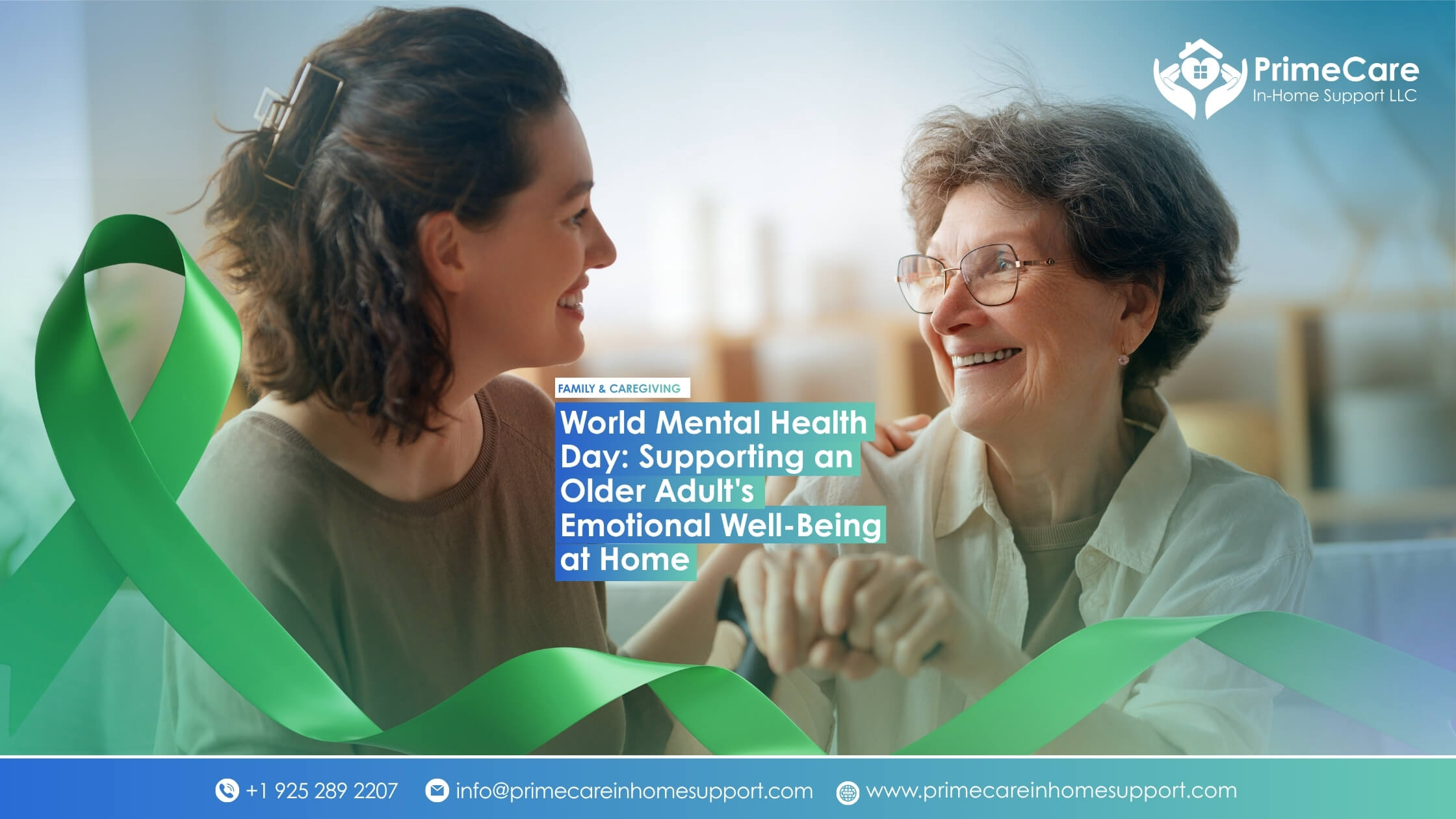
World Mental Health Day · October 10
World Mental Health Day: Supporting an Older Adult’s Emotional Well-Being at Home
Mental well-being matters at every age. For older adults, a steady routine, meaningful connection, and a caregiver who truly listens can make home feel safe, familiar, and emotionally supportive.
The short version
- Sadness, withdrawal, and worry are not a “normal part of aging.” They deserve attention and kindness.
- Routine, purpose, movement, and human connection are among the most powerful everyday supports.
- Listening without fixing is often more helpful than advice.
- Non-medical home care can ease loneliness and daily stress, and a doctor or counselor should guide any diagnosis or treatment.
Every year on October 10, World Mental Health Day invites us to talk openly about emotional well-being. It is a good moment to include the older adults in our lives in that conversation. Many seniors grew up in a time when feelings were kept private, and when asked “How are you?” they answer “I’m fine.” Behind that answer there may be grief, loneliness, worry about health, or a quiet fear of losing independence.
The good news is that home can be one of the best places to support emotional health. Familiar rooms, favorite routines, and trusted faces matter. At PrimeCare In-Home Support, we believe care should support independence, not replace it, and that includes the independence of a person’s inner life: their sense of purpose, dignity, and being heard.
According to the World Health Organization, roughly one in seven adults aged 60 and over lives with a mental health condition, and many go unrecognized or untreated. That is why noticing early matters.
Changes in mood can look different in older adults
Emotional struggles in later life do not always look like sadness. They often show up as changes in behavior, energy, or habits. Pay attention if you notice:
- Withdrawing from friends, family, hobbies, or activities once enjoyed
- Changes in sleep or appetite, or unexplained fatigue
- Irritability, restlessness, or constant worry
- Neglecting grooming, meals, medications, or the home
- Frequent talk of feeling like a burden, hopeless, or not wanting to go on
These changes can also be linked to physical health, medication side effects, hearing or vision loss, or memory changes, so a conversation with a doctor is always a wise step.
Six simple ways to support emotional well-being at home
- Keep a gentle routine. Regular times for waking, meals, and activities create a reassuring rhythm, especially when life feels uncertain.
- Protect a sense of purpose. Let them water the plants, fold laundry, choose the menu, or share a family recipe. Doing, not just receiving, builds confidence.
- Make connection a habit. Phone calls, video chats, visits from neighbors, and shared meals all help fight isolation.
- Get moving and get outside. A short walk, light stretching, or time in the sunlight can lift mood and improve sleep, within what their doctor says is safe.
- Nourish the body. Regular, enjoyable meals and plenty of water support energy and mood.
- Honor their preferences. Music they love, a favorite chair, familiar photos, and daily choices all say, “You matter here.”
Needing a helping hand doesn’t mean giving up independence, and it never means giving up dignity.
How to talk about feelings without making it awkward
Many older adults hesitate to share what they feel because they do not want to worry anyone. You may hear things like:
“I don’t want to be a bother.”
“The days are just so long now.”
“I’m fine, really. Don’t fuss.”
These are openings. A few small shifts in how we respond can invite honesty instead of closing the door:
Try to avoid
“Don’t be silly, you have nothing to be sad about.”
Try instead
“That sounds really hard. Do you want to tell me more?”
Try to avoid
“You just need to get out more.”
Try instead
“I’ve missed our time together. Could we take a short walk today?”
Listening without rushing to fix, sitting beside them, and letting silence be okay are all powerful ways to show care.
Where a caregiver can make a difference
Family members often carry most of this support, and that can be exhausting. A trusted caregiver can share the load while keeping your loved one comfortable at home. PrimeCare provides non-medical care that supports emotional well-being in everyday ways:
- Companion care: conversation, shared activities, walks, and a friendly face that helps reduce loneliness.
- Personal care: respectful help with bathing, dressing, and grooming, so your loved one feels clean, comfortable, and like themselves.
- Dementia care: patient, familiar routines for people living with memory changes, who may feel anxious or confused.
- Post-hospital recovery care: steady support at home after a hospital stay, when worry and low mood are common.
- Respite care: a break for family caregivers, because caring for yourself is part of caring for them.
Every caregiver at PrimeCare is a Registered Home Care Aide with the CDSS and completes fingerprinting and a full criminal background check before working with clients. Care plans are built around the individual, not the diagnosis, and adjust as needs change.
Know when it’s time to involve a professional
Home care is non-medical, and it is not a substitute for a doctor, counselor, or mental health professional. Reach out to your loved one’s primary care provider if low mood, worry, or withdrawal lasts more than a couple of weeks, gets worse, or starts to affect eating, sleeping, or daily life.
If someone talks about harming themselves or not wanting to live, take it seriously right away. In the U.S., call or text 988 to reach the 988 Suicide & Crisis Lifeline any time, day or night. If there is immediate danger, call 911.
Frequently asked questions
Is depression a normal part of aging?
No. Older adults can feel sad or anxious, but persistent low mood is not something that simply has to be accepted with age. It is worth discussing with a doctor, and support at home can help.
How can I support an older parent’s mental health at home?
Keep a gentle daily routine, encourage connection with family and friends, help them stay active and eat well, protect their sense of purpose, and listen without judgment. If worries continue, encourage a visit to their doctor.
Can in-home care help with loneliness?
Yes. Regular visits from a friendly, consistent caregiver offer conversation, shared activities, and companionship. This can make days feel more connected and less isolating.
Does PrimeCare provide mental health treatment?
No. PrimeCare provides non-medical home care. Our caregivers support everyday well-being, such as companionship, routines, and personal care, and they work alongside your loved one’s doctor and family.
How do we get started with PrimeCare?
Call us or request a free assessment. We visit your loved one at home, learn their needs and routines, and build a personalized care plan with no obligation. PrimeCare offers flexible scheduling with a 4-hour minimum shift.
Let’s build a care plan together.
Free, no-obligation consultation, personalized to your family’s needs. Serving Alameda, Contra Costa, San Mateo, San Francisco, and Santa Clara counties.
This article is for general information and is not medical advice. PrimeCare In-Home Support is a licensed home care organization (HCO #014700283) providing non-medical care. Always consult a doctor or qualified mental health professional about diagnosis and treatment.