
San Leandro, CA · Local Family Guide
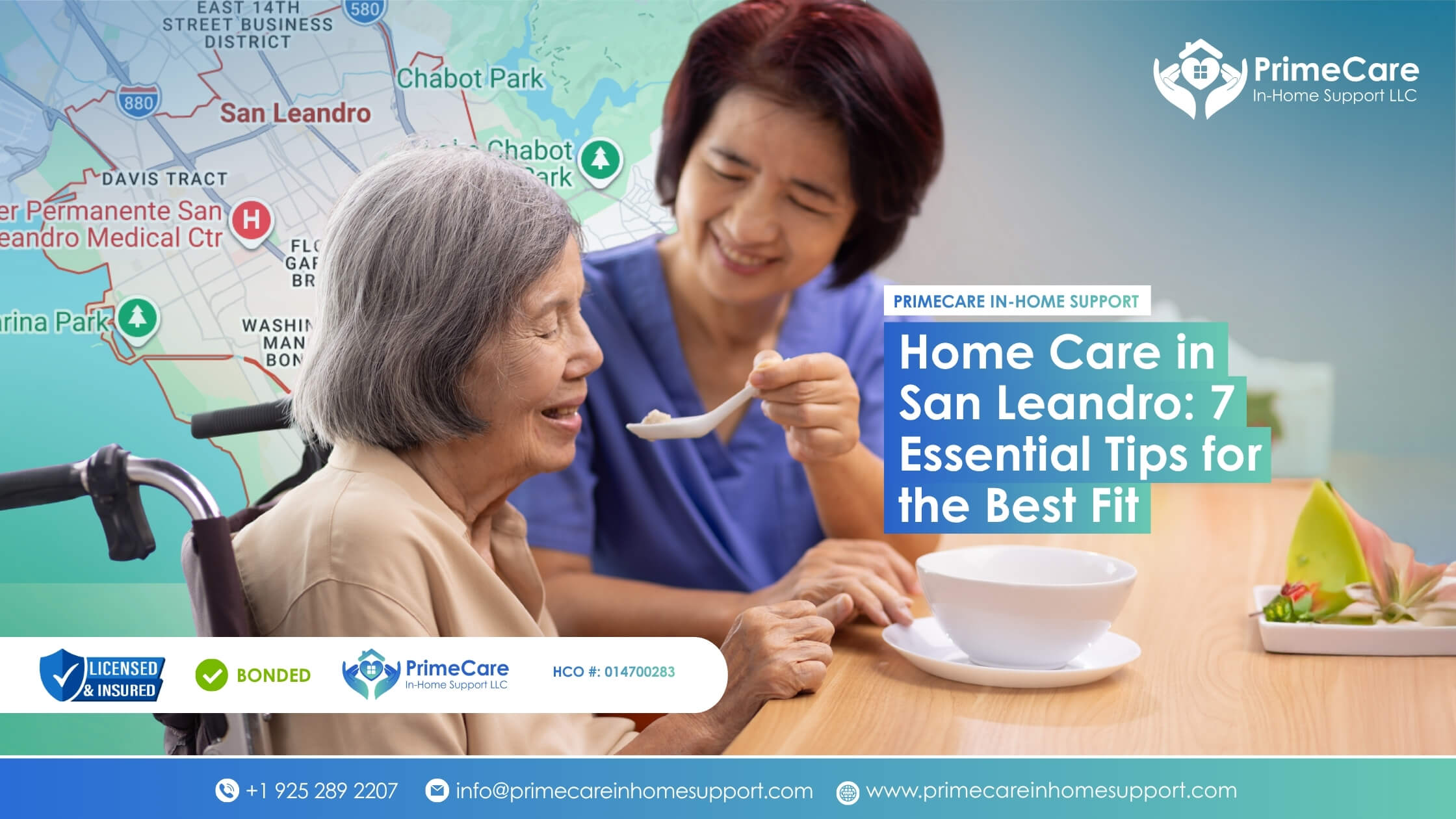
Home Care in San Leandro: 7 Essential Tips for the Best Fit
Finding home care in San Leandro can feel overwhelming. These seven tips explain what care includes, how to confirm an agency is licensed, which local senior resources can help, and how to start with confidence.
The short version
- Home care in San Leandro ranges from a few hours of companionship a week to 24-hour support, so start with the daily routine, not a label.
- California requires home care agencies to be licensed, and caregivers must be registered home care aides who passed a background check.
- San Leandro has strong local senior resources, including the Senior Community Center, FLEX RIDES paratransit, and Alameda County’s Senior Information & Assistance team.
- A free in-home assessment is a no-pressure way to see what care could look like, and the plan can change as needs change.
Home care in San Leandro means different things to different families. For one household, it is a few hours of company and help with lunch twice a week. For another, it is overnight support after a hospital stay, or a break for an adult child who has been carrying everything alone.
Whatever the situation, the goal is usually the same: helping an older adult stay in the home they know, with dignity and a sense of control. This guide walks through seven practical tips we share with local families, along with the resources San Leandro and Alameda County already offer.
PrimeCare In-Home Support is a licensed, non-medical home care agency headquartered right here in San Leandro. We know these streets, these neighborhoods, and the questions families ask first. You can read more about our home care services in San Leandro, or keep reading for the full guide. Everything below is general information to help you plan, not medical advice.
In this guide

1. Understand what home care in San Leandro includes
Non-medical home care is practical, hands-on help with the everyday activities that keep a person safe and comfortable at home. It is not nursing, and it does not replace a doctor. It fills the gaps in a normal day.
Home care in San Leandro commonly covers four areas:
- Personal care: bathing, dressing, grooming, toileting, and safe movement around the home.
- Companionship: conversation, walks, hobbies, errands, and rides to appointments.
- Home support: meal preparation, light housekeeping, laundry, and medication reminders.
- Specialized support: patient routines for memory changes, help after a hospital stay, and respite for family caregivers.
A useful exercise is to write down one ordinary day, from waking up to bedtime. Note where your loved one needs a hand, where they manage fine, and where the day feels risky or lonely.
That list is the real starting point for choosing care, far more than a diagnosis or a label. It also gives you something concrete to share with any agency you call, so the conversation starts with real needs instead of guesses.
Picture a retired teacher who still cooks, reads, and loves a good chat, but dreads the shower and has stopped driving to the pharmacy. Her plan might be two morning visits a week for bathing and a weekly outing. That is home care working exactly as intended: small, targeted, and respectful.
If you are not sure how much help is the right amount, our simple framework for choosing the right level of care is a good companion to this guide.
2. Watch for the signs that help may be needed
Most families do not decide overnight. They notice small changes first, and then a single moment makes the need obvious. Common signs include:
- Difficulty bathing, dressing, or keeping up with grooming
- A fall, a near-fall, or new unsteadiness on stairs
- Skipped meals, an empty refrigerator, or noticeable weight changes
- Forgotten medications or missed appointments
- Growing isolation or loss of interest in favorite activities
- Piles of mail, laundry, or dishes that never used to be a problem
- A spouse or family caregiver who seems exhausted
- Repeated “I’m fine” answers that do not match what you see
No single sign means a crisis. A pattern, though, means it is worth a calm, kind conversation. Many families tell us they wish they had started that conversation a few months sooner.
If you live far away or only visit on holidays, look closely during your next stay. Check the refrigerator, the mail, the pill organizer, and the corners of the house. Notice new bruises, stained clothing, or a once-tidy home that has quietly changed.
Changes in mood and withdrawal deserve a closer look too. Our guide to supporting an older adult’s emotional well-being at home explains what to watch for and when to involve a doctor.
The best care plan starts with the person, not the paperwork.
3. Match the level of care to the need
Home care is flexible. It is not all-or-nothing, and it does not have to start big. Families in San Leandro often begin with a few hours a week and add more as needs change.
- Companion care: a few hours a week of conversation, activities, and company to ease loneliness.
- Personal care: daily hands-on help with bathing, dressing, and grooming.
- Dementia care: consistent, familiar routines for people living with memory changes.
- Post-hospital recovery care: steady support at home after a hospital stay.
- Respite care: a scheduled break for family caregivers who need rest.
- 24-hour home care: round-the-clock presence when someone should not be alone, day or night.
PrimeCare offers flexible scheduling with a 4-hour minimum shift, so you can build a rhythm that fits your family’s week instead of forcing your week to fit a rigid package.
Needs also move in both directions. A person recovering from surgery may need more help for a few weeks and then less. A good plan is reviewed regularly, not set in stone.
Many families also mix and match. A common pattern is personal care on weekday mornings, a companion visit on Saturday, and an occasional respite shift so the family caregiver can attend their own appointments or simply rest.
4. Confirm you are hiring licensed home care in San Leandro
This is the tip that protects your family most. California regulates agencies under the Home Care Services Consumer Protection Act. It requires home care organizations to be licensed through the California Department of Social Services, and it requires their caregivers, called home care aides, to pass a background check and register with the state.
Before you sign anything, ask these questions:
- Is the agency licensed by the state, and will they share their license number?
- Is every caregiver a registered home care aide with a completed criminal background check?
- Are caregivers employees of the agency, or independent contractors your family would need to manage?
- Who covers a missed shift, and how quickly?
- Is the agency insured and bonded?
- Is the first assessment truly free and without obligation?
PrimeCare is licensed as a home care organization (HCO #014700283) and is bonded and insured. Every caregiver is a Registered Home Care Aide with the CDSS and completes fingerprinting and a full criminal background check before working with clients.
Hiring a private caregiver directly can look less expensive on paper. It can also make your family the employer, with payroll tax and wage-claim responsibilities. If you are weighing that option, it is worth a conversation with an elder law attorney or tax professional first.
5. Tap into San Leandro’s local senior resources
Private home care works best alongside the public and nonprofit support already in your community. San Leandro and Alameda County offer several programs worth knowing about, and many families use them together with in-home care.
- San Leandro Senior Community Center: drop-in programs, social activities, and health and fitness classes at 13909 E 14th Street.
- FLEX RIDES paratransit: a city-based shuttle and on-demand ride program for San Leandro residents who are older adults or adults with disabilities. See the city’s senior services page.
- Alameda County Senior Information & Assistance: a team that helps families navigate programs for older adults and publishes resource guides on senior housing, food and nutrition, and more.
- Spectrum Senior Meals: hot lunches for adults 60 and over, offered as group dining or take-away with a small suggested contribution. Details are on the city’s senior services page.
- 2-1-1 through Eden Information & Referral: a free, confidential line, open 24 hours a day, with multilingual support for housing, health, and human services.
- California Department of Aging: a state directory of aging services in Alameda County.
- In-Home Supportive Services (IHSS): a publicly funded program some families explore alongside or before private care. Eligibility rules apply, and Alameda County Social Services can explain them.
The county’s Area Agency on Aging is another strong starting point if you are not sure which program fits.
If you are a professional fiduciary, elder law attorney, or care manager supporting a San Leandro client, this list is a handy place to start. If you would like help sorting out which pieces fit a particular situation, our team is glad to talk it through.
Programs, hours, and eligibility change over time, so confirm details with each organization before you rely on them.
One pattern we see often: an older adult enjoys lunch and classes at the Senior Community Center, uses a ride program to get there, and has a caregiver at home for bathing and meal preparation. Each piece supports the others, and none of them takes away independence.
6. Choose home care in San Leandro that fits your neighborhood
Where a caregiver is based matters more than most families expect. A team headquartered in San Leandro can respond faster, understand local traffic and parking, and build relationships with nearby families.
PrimeCare serves every part of the city, including:
- Downtown San Leandro
- Bay-O-Vista
- Broadmoor
- Estudillo Estates
- Marina Faire
- Washington Manor
If you are located anywhere in San Leandro or a nearby community, our caregivers are here to help.
Schedule fit matters too. Some families need mornings for bathing and breakfast. Others need evenings, overnights, or weekends. Ask any agency how they match caregivers to a schedule, and whether your loved one will see the same familiar faces.
Consistency is a big part of comfort. When the same caregiver visits regularly, your loved one has time to build trust, and the caregiver learns the routines, preferences, and small details that make home feel like home.
It also helps to ask a few practical questions. Does the agency match caregivers by language, personality, or interests? How are caregivers supervised? Who do you call at 7 a.m. if a caregiver is running late? Clear answers here are a good sign.
Our service area includes all of Alameda County, and we also serve Contra Costa, San Mateo, San Francisco, and Santa Clara counties.
7. Start with a free assessment and plan to adjust
The first step does not have to be a commitment. A free in-home assessment is simply a conversation, in your loved one’s own space, about what a good day looks like and where support could help.
- Call or request a free assessment.
- Meet at home to talk through needs, routines, and preferences.
- Receive a personalized care plan built around the individual.
- Begin care on a schedule that fits, and review it as needs change.
Bring your loved one into the conversation as early as you can. People accept help more readily when they help shape it. If they feel hesitant, start with something small, like a few hours of help with errands and lunch, and let trust build.
The way you open the conversation matters, too:
Try to avoid
“You can’t manage on your own anymore.”
Try instead
“What would make your days easier right now?”
Finally, keep the family in the loop. Share the care plan with siblings, and with any fiduciary or attorney involved, so everyone is working from the same page.
To make your first call smoother, jot down a few notes beforehand: the daily routine you wrote in Tip 1, preferred days and times, any home safety worries, and the names of family members or professionals who should stay informed. You do not need every answer. A rough picture is enough to begin.
Whatever you decide, you do not have to figure out home care in San Leandro alone. A short call can turn a pile of worries into a clear next step.
Frequently asked questions
What does home care in San Leandro include?
Non-medical home care in San Leandro includes personal care such as bathing and dressing, companionship, meal preparation, light housekeeping, laundry, medication reminders, rides to appointments, and specialized support for memory changes, post-hospital recovery, and family caregiver respite.
How do I know a San Leandro home care agency is licensed?
California requires home care organizations to be licensed by the Department of Social Services, and caregivers must be registered home care aides who passed a background check. Ask any agency for its license number and confirm that every caregiver is registered.
Is home care the same as home health care?
No. Home care is non-medical help with daily living, such as personal care, companionship, and household tasks. Home health care is medical care delivered by licensed health professionals, usually under a doctor’s orders. Many families use both.
Can I get home care in San Leandro for just a few hours a week?
Yes. PrimeCare offers flexible scheduling with a 4-hour minimum shift, so families can start with a few visits a week and increase support as needs change.
Does PrimeCare serve every San Leandro neighborhood?
Yes. PrimeCare serves Downtown San Leandro, Bay-O-Vista, Broadmoor, Estudillo Estates, Marina Faire, Washington Manor, and nearby communities.
Does Medicare pay for home care in San Leandro?
Original Medicare generally does not cover non-medical, long-term personal care at home. Families often pay privately, and some use long-term care insurance, veterans benefits, or county programs such as IHSS when eligible. A benefits advisor or your insurer can confirm what applies to your situation.
What if my parent says they do not need help?
This is very common. Listen first, ask what would make their days easier, and consider starting with a small, low-pressure step such as a few hours of help with errands or meals. Trust usually builds with time, and the plan can grow if and when your parent is ready.
How do we get started with PrimeCare?
Call us or request a free assessment. We visit your loved one at home, learn their needs and routines, and build a personalized care plan with no obligation.
Let’s talk about home care in San Leandro.
Free, no-obligation consultation, personalized to your family’s needs. Serving San Leandro and Alameda, Contra Costa, San Mateo, San Francisco, and Santa Clara counties.
This article is for general information and is not medical or legal advice. PrimeCare In-Home Support LLC is a licensed home care organization (HCO #014700283) providing non-medical care, located at 433 Callan Ave STE 203, San Leandro, CA. Always consult a doctor, attorney, or other qualified professional about medical, legal, or financial decisions.